
This post contains affiliate links — if you buy through them, we may earn a small commission at no extra cost to you. Learn more
Ninja Transfers is one of the best DTF transfer suppliers you can order from in 2026: gang sheet pricing from around $0.02 per square inch, no minimum order, 24-48 hour turnaround, and transfers independently tested to survive 100+ washes. We run direct-to-film and DTG jobs in our own print shop every week, so we judge a transfer supplier the way a production floor does — by consistency, turnaround and how the print feels after the tenth wash. Here is our full review.
Ninja Transfers at a Glance
| Details | |
|---|---|
| What they sell | Custom DTF transfers (precut & gang sheets), UV DTF stickers, specialty DTF (glitter, 3D puff, foil, glow-in-dark), patches, blanks, heat presses |
| Pricing | From ~$0.02/sq inch on gang sheets; no art fees |
| Minimum order | None — from 1 transfer to 100,000+ |
| Turnaround | 24-48 hours production; free US shipping over $75 |
| Durability | 100+ washes, third-party tested |
| Application | 310°F (155°C), 12-15 seconds medium pressure + 5s repress; hot peel ("Ninja Peel") |
| Works with | Heat press (recommended), household iron, Cricut press |
| Reputation | ~4.7/5 on Trustpilot; responsive support |
Check current Ninja Transfers pricing →
What Is a Ninja Transfer, Exactly?
A "Ninja transfer" is a direct-to-film (DTF) heat transfer: your design is printed with textile inks onto a special PET film, coated with adhesive powder, and cured. You (or your customer) then press it onto a garment with heat. The result sits on top of the fabric like screen print, works on cotton, polyester, blends, and dark garments, and needs no weeding or pre-treatment.
The practical magic is what this does for a small t-shirt business: you can hold zero printed inventory, order transfers as designs sell, and press shirts to order in your garage. If you are new to DTF, our printing methods hub explains how it compares to DTG, screen printing and sublimation.
Pricing: How Much Do Ninja Transfers Cost?
Ninja Transfers prices by size, and the economics reward planning: on gang sheets (large sheets you fill with as many designs as fit) pricing drops to around $0.02 per square inch. In practice:
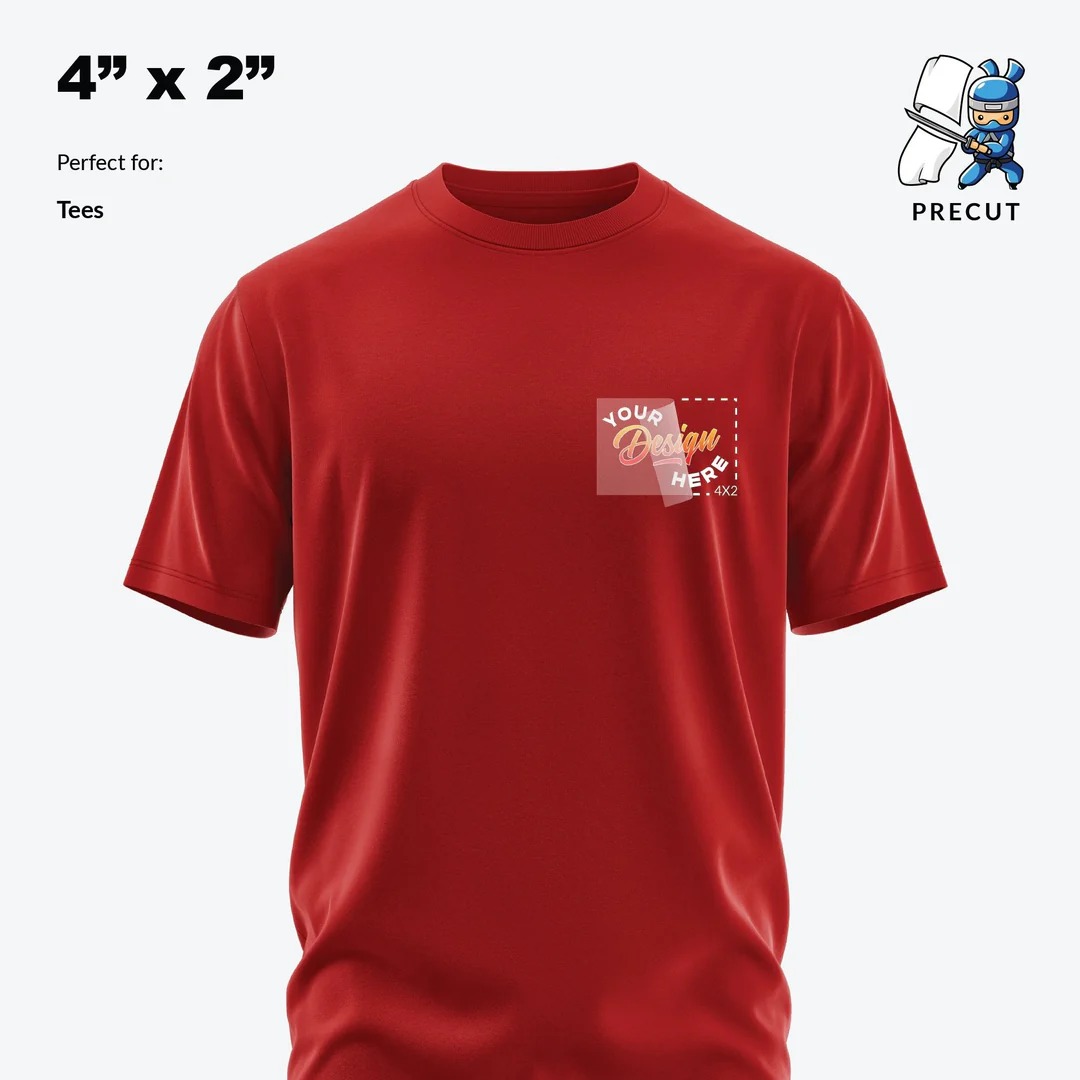
- A 4"×2" left-chest logo costs pennies when ganged — order 50 on one sheet and you pay less than a coffee
- A full-size 11"×11" front print lands in the $2-4 range on gang sheets — compare that with $8-15 per print for outsourced DTG
- No minimums and no art fees — you can literally order one transfer to test quality before committing (we recommend exactly that)

Free shipping kicks in at $75, which one medium gang sheet order usually clears. They also take Klarna, Sezzle and Afterpay if you want to split a bigger gang sheet order into interest-free installments — useful when you are stocking up for an event. For a small brand pressing 20-50 shirts a month, transfer cost per shirt typically ends up between $0.50 and $2.50 — a margin-friendly number when tees retail at $25+. We break down the full business math in our guide to starting a t-shirt business.
Quality & Durability: Do Ninja Transfers Last?
This is where DTF suppliers separate. Ninja Transfers publishes a 100+ wash durability claim, verified by third-party testing (washed at 80°F, normal cycle) — double the 50-wash rating some premium competitors advertise. Their Trustpilot profile sits around 4.7/5 across hundreds of reviews, with color vibrancy and print sharpness the most repeated praise.
From a print-shop perspective, the honest picture: properly pressed DTF from a quality supplier outlasts the garment’s shape in most cases. The failures we see in the wild are almost always application failures — wrong temperature, too little pressure, skipped repress — not film failures. Which brings us to the next section.
Application: Heat Press, Cricut or Household Iron?
The official recipe is simple: 310°F / 155°C, 12-15 seconds of medium pressure, hot peel, then a 5-second repress. Their "Ninja Peel" film peels hot, which genuinely speeds up batch pressing — no waiting for each print to cool.
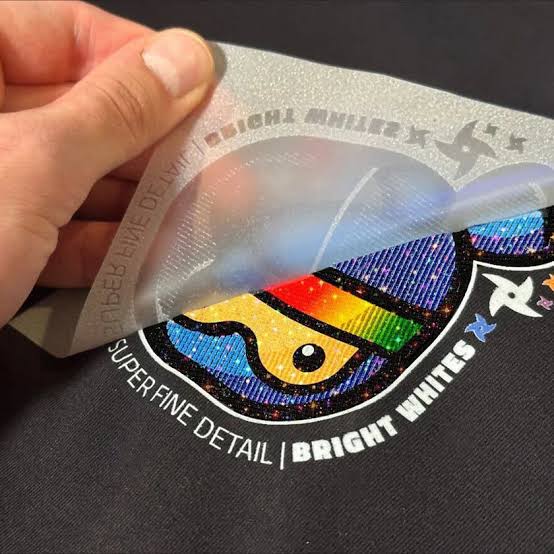
Can you use an iron for Ninja Transfers? Officially yes — and for a one-off gift shirt it can work. But we will be straight with you: household irons are the #1 source of failed DTF applications. Most irons do not hold a true 310°F across the plate and cannot deliver even pressure, and complaints about peeling transfers almost always trace back to an iron that "wasn’t getting hot enough." If you are selling shirts — even 10 a month — a basic heat press pays for itself immediately and removes the variable entirely. Ninja sells presses too, and their heat press bundles ship free.
Beyond Standard DTF
Worth knowing about the catalog beyond plain transfers: UV DTF "PermaStickers" (permanent stickers for hard surfaces — mugs, bottles, laptops), and specialty DTF in glitter, 3D puff, spangle, foil and glow-in-the-dark. If your shop sells at fairs or does team merch, puff and glitter transfers are an easy upsell that costs you nothing extra in equipment.
Ninja Transfers vs Supacolor
The comparison we get asked about most. Both are premium suppliers, and you will not go badly wrong with either — but they optimize for different things:
- Price: Ninja Transfers is meaningfully cheaper, especially on gang sheets. Supacolor charges a premium.
- Durability rating: Ninja publishes 100+ washes (third-party tested); Supacolor rates its transfers at 50+ washes.
- Feel & underbase: Supacolor’s SupaDTF is known for a soft hand and a bright white underbase — a real advantage on dark premium garments.
- Sustainability credentials: Supacolor’s OEKO-TEX certified water-based inks matter if your brand markets eco claims.
- Turnaround: Ninja’s 24-48h production with next-day options is the faster default.
Our take: for most POD sellers and small shops, Ninja Transfers wins on price-per-print, speed and no-minimum flexibility. Supacolor earns its premium for high-end apparel brands where hand-feel is a selling point.
Verdict: Who Should Use Ninja Transfers?
- New t-shirt sellers without equipment — order transfers as you sell, press to order, zero inventory risk. Pair with designs from Kittl or Placeit and you have a full production pipeline for under $100.
- Etsy/craft-fair sellers — gang sheets + specialty transfers = healthy margins on personalized items.
- Print shops — as overflow capacity, or for jobs where DTF beats your in-house method (small runs on poly blends, for instance). This is how services like this fit into our own workflow.
The weak spots, for balance: shipping is US-centric (international buyers should check rates first), household-iron application is riskier than the marketing implies, and like any made-to-order service, quality of your file in = quality of print out. None of these are dealbreakers; all are worth knowing.
Try Ninja Transfers — no minimums, order a single test transfer →
FAQ
How much do Ninja Transfers cost?
Pricing is by size, starting as low as $0.02 per square inch on gang sheets. A small left-chest print costs well under $1; a full 11"×11" front print typically lands around $2-4 when ganged. There are no minimum orders and no art fees, and US shipping is free over $75.
Do Ninja Transfers last?
Yes — Ninja Transfers are third-party tested to survive 100+ washes without cracking, peeling or significant fading (washed at 80°F, normal cycle, line dry). Proper application matters: press at 310°F for 12-15 seconds with medium pressure and always do the 5-second repress.
What is a Ninja transfer?
A Ninja transfer is a custom direct-to-film (DTF) heat transfer: your design printed on PET film with adhesive powder, ready to heat-press onto cotton, polyester, blends or dark garments. No weeding, no pre-treatment, and it works on nearly any fabric.
Can I use an iron for Ninja Transfers?
Technically yes — Ninja Transfers can be applied with a household iron for one-off projects. In practice, most failed applications come from irons that cannot hold a true 310°F or apply even pressure. For anything beyond an occasional shirt, a basic heat press is strongly recommended.

Leave a Comment